Hiển thị các bài đăng có nhãn Cao Dai temple and Cu Chi tunnel trip. Hiển thị tất cả bài đăng

Chủ Nhật, 2 tháng 8, 2015

Around Angkor Thom (Part 1)

Beauty Spots 


Ta Prohm BUDDHIST TEMPLE


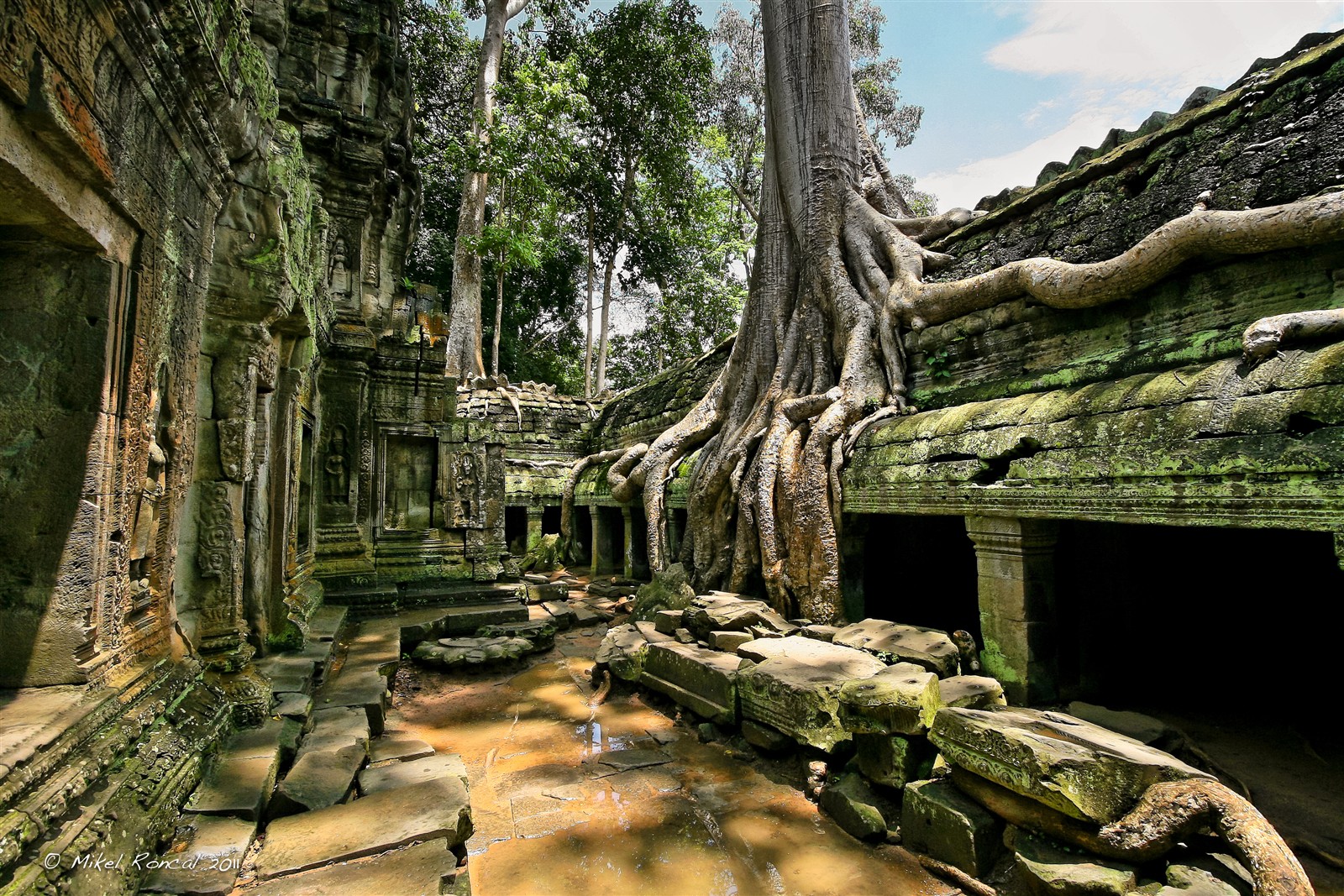
The eventual Indiana Jones fantasy, Ta Prohm is cloaked in stippled gloominess , its decomposing towers and walls locked in the sluggish , muscular embrace of large main systems. If Angkor Wat, the Bayon and other temples are witness to the brilliance of the ancient Khmers, Ta Prohm reminds people equally of the excellent fertility and influence of the forest . There is a romantic cycle to this admired , with humanity earliest conquering natural world to speedily create, and Mother Nature once again discovering humanity to unhurriedly demolish .
Built from 1186 and initially known as Rajavihara (Monastery of the King), Ta Prohm was a Buddhist temple devoted to the mother of Jayavarman VII. Ta Prohm is a temple of towers, close courtyards and narrow corridors. Very old trees tower overhead, their leaves filtering the sunlight and casting a greenish pall over the whole scene. It is the closest most of us can get to feeling the charm of the explorers of old.


Phnom Bakheng HINDU TEMPLE


Around 400m south of Angkor Thom, that hill’s primary draw is the sunset view of Angkor Wat, though this has turned into something of a festival , with hundreds of travellers jockeying for space. The temple, built by Yasovarman I (r 889–910), has five tiers with seven levels.


Preah Khan BUDDHIST TEMPLE


(Sacred Sword) The temple of Preah Khan (Sacred Sword) is one of the biggest constructions at Angkor, a maze of vaulted corridors, fine carvings and lichen-clad stonework. Constructed by Jayavarman VII, it covers a very large area, but the temple itself is within a rectangular wall of about 700m by 800m. Preah Khan is a genuine fusion temple, the eastern entrance devoted to Mahayana Buddhism, with equal-sized doors, and the other cardinal directions devoted to Shiva, Vishnu and Brahma, with successively smaller doors, emphasising the unequal nature of Hinduism.


Preah Neak Poan BUDDHIST TEMPLE


Another late-12th-century work of – no surprises here – Jayavarman VII, this little temple just east of Preah Khan has a large square pool surrounded by four smaller square pools, with a circular ‘island’ in the middle. Water once flowed from the central pond into the four peripheral pools via four ornamental spouts, in the shape of an elephant’s head, a horse’s head, a lion’s head and a human head.


Roluos Group HINDU TEMPLE


The monuments of Roluos, which served as the capital for Indravarman I (r 877–89), are among the earliest big eternal temples constructed by the Khmers and mark the dawn of Khmer classical art. Preah Ko, dedicated to Shiva, has elaborate inscriptions in Sanskrit on the doorposts of each tower and some of the best surviving examples of Angkorian plasterwork. The city’s central temple, Bakong, with its five-tier central pyramid of sandstone, is a representation of Mt Meru. Roluos is 13km southeast of Siem Reap along NH6.
Xem chi tiết ...

Thứ Tư, 8 tháng 7, 2015

Co Loa Festival

Annually held after Tet Holiday, Co Loa Festival pays homage to King An Duong Vuong who built the Au Lac Kingdom and the Co Loa Citadel to fight the battle against enemies in III B.C.


Taking place from the 6th to the 16th day of the Lunar New Year at An Duong Vuong temple in Dong Anh District, on the outskirts of Hanoi, Co Loa Festival based on the legend of An Duong King of Au Lac and his magic crossbow. According to the legend, Genius Kim Quy, a Golden Tortoise, gave Thuc Phan (An Duong Vuong) a magic crossbow which could kill tens of thousands of enemy soldiers at a shot. However, the King’s daughter My Chau told the secret of her father's magic crossbow to her husband Trong Thuy, the son of rebel Chinese general Trieu Da, and thereby unwittingly enabled Trieu Da to conquer Co Loa in 208 B.C. Learned of the reason for his defeat, King An Duong is said to have killed his daughter and then committed suicide. Nowadays, in Co Loa citadel, there exists many vestiges still reminding you of the episodes of the legend.

Visiting Co Loa on the 6th of the 1st lunar month, you will have the opportunity to take part in Co Loa Festival organized by the 12 hamlets of the village. Thuc Phan An Duong Vuong was remembered for building Co Loa citadel and for ruling Au Lac for 50 years, 3rd century B.C. Besides the ceremonial rites in honour of King An Duong Vuong at the Upper Temple, there is an imposing and solemn procession of 12 palankeens going round the Trong Thuy Well to the Village gate. Moreover, in the festival, people also put a lot of effort into celebrating traditional activities.

On the afternoon of the 5th day of the first lunar month, all of the eight communes (including Co Loa Commune and the establishing relations between seven communes) hold the incense offering ceremony at the communal house. At Thuong Temple, village officials and mandarins hold the similar ceremony and revise the King’s contributions and achievements. The official festival day, which is on the 6th of the first lunar month, commences with processions of notables from surrounding villages to the King An Duong Temple where a miniature royal court containing an incense burner, a stone tablet and a funeral oration is placed in front of the two altars. The literature procession is preceded by a flag that symbolizes the five elements (metal, wood, water, fire and earth), a musical company, and a sacrifice. This procession featuring two sedan chairs proceeds through the 12 hamlets of  Co Loa Commune. One carries a small statue of the King, the other a beheaded statue of his daughter which symbolizes for her punishment. The procession then continues to the Trong Thuy Well and back to the various hamlets, accompanied by firecrackers.

Preceded by the literature procession is a sacrificial ceremony that lasts until 12 p.m. The ceremony takes place in the King's honour, accompanied by traditional music. Next to the ceremony is the procession of 12 villages to take the god from the temple to the communal house so that he can watch the festivities. This is the biggest procession with the participation of all the palanquins. When reaching the main entrance, the palanquins return to their villages. Co Loa’s procession and palanquin do the same rituals once more at the communal house. The festival continues until the 16th day of the first lunar month, with evening fireworks displays, traditional games such as cock fighting, human chess, tug of war, card playing, wrestling, swing, rope climbing, martial arts, flag dancing and archery and performances of ca tru, cheo and tuong.

On the final day of the festival, a grand farewell ceremony will be held at the temple. After the rituals which are the same as in the main festival day, the cult table of god will be returned to the sanctuary. Local people enjoy the god’s favour and expect a year of prosperity and protection from the god. The meaningful festival is always closed with a thanksgiving ceremony.
Xem chi tiết ...

Thứ Sáu, 15 tháng 8, 2014

Cao Dai Temple and Cu Chi tunnels tour 1 day


Hochiminh Muslim Tour Malaysia sincerely introduce the Cao Dai Temple & Cu Chi tunnels tour 1 day as follows:


  • At 8.15am -  Drive west to Tay Ninh, the centre of Caodaism. O­n arrival we attend the fantastic mid-day temple service when the followers fill the hall wearing colored robes, a symbol of the curious combination of Confucianism, Taoism and Buddhism.

  • O­n the way back, stop to visit the Cu Chi Tunnels, an underground network of tunnels constructed by Vietnamese fighters during the struggle for independence. The tunnels contained hospitals, accommodation, etc. and were used as a military base for the Vietcong during the American war.

  • Drive back to HCMC around 6.00pm.

  • End of Cao Dai Temple & Cu Chi tunnels full day tour.

Joining tour: US$19/person


Includes:
  • A/c bus for transfer & sightseeing as per program.

  • English speaking tour guide

  • All entrance fee

  • Mineral water on bus (1 bottle/ pax)

  • Lunch
Excludes:

  • Travel insurance

  • Hotel pick up & drop off

  • Drinks & other meals not mentioned in the program.
Note:

  • Private tour is available on request. We highly recommend you do private tour for more privacy as well as more convenience.
Thank you for visiting our Cao Dai Temple & Cu Chi tunnels tour 1 day. We are looking forward to serving you.

Xem chi tiết ...